
Bone health
Exercise for Osteoporosis in Brookvale
Physiotherapy and exercise programs for osteoporosis in Brookvale. We develop individualised exercise programs to build strength, improve balance and support bone health, while guiding you on which movements may need to be modified.
- Brookvale4/42-46 Wattle Road, Brookvale NSW 2100
- Terrey Hills · Wednesdays17 Yulong Avenue, Terrey Hills NSW 2084
- Physio assessment first
- Small groups
- Designed with our physio
Understanding it
Osteoporosis and exercise
Osteoporosis is a condition where bones become less dense and more fragile, increasing the risk of fractures, particularly in the hips, spine and wrists. Osteopenia refers to lower-than-normal bone density, but not as low as osteoporosis. Both are common, particularly as we age and in women following menopause. There is generally no obvious symptoms until a fracture occurs.
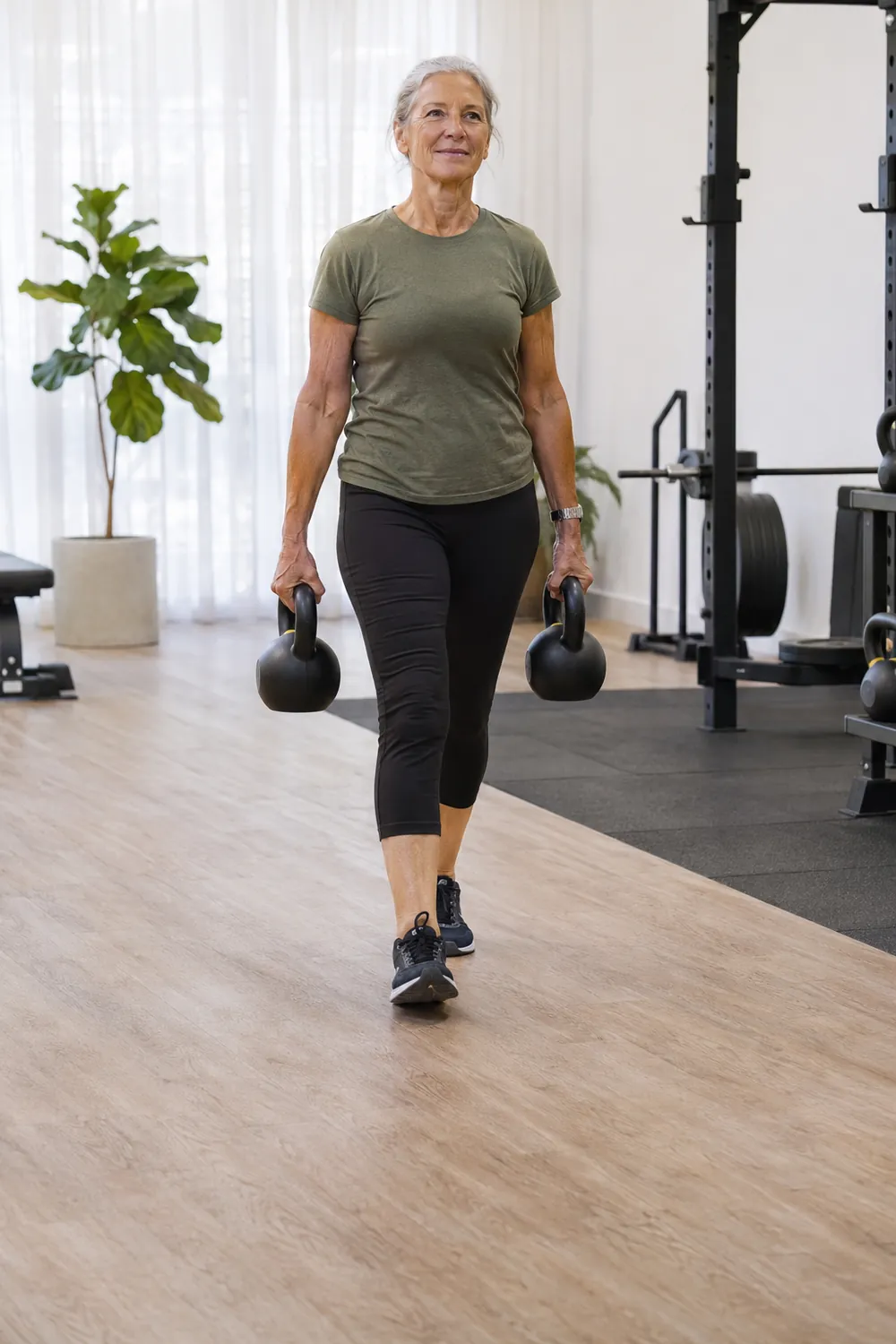
Exercise is an important part of managing osteoporosis. Progressive strength training, weight-bearing exercise and balance training help support bone health, maintain muscle strength and reduce the risk of falls. Your physiotherapist will also guide you on movements that may need to be modified, particularly heavily loaded forward bending and twisting, depending on your bone health and fracture history.
Exercise for osteoporosis may suit you if
- You’ve been diagnosed with osteoporosis or osteopenia
- You’ve had a fracture following a minor fall or everyday activity
- You want to exercise but are unsure which movements are safe
- You feel less steady on your feet than you used to
- You want to maintain strength, mobility and independence as you get older
Why it happens
Exercise for osteoporosis: what a program includes
Programs are tailored to your bone density, fracture history, fitness, physical abilities and individual goals.
Strength training
Progressive resistance exercises to build muscle strength and place appropriate loading through the bones.
Weight-bearing exercise
Activities such as walking and, where appropriate, low-level impact exercise to support bone health.
Balance training
Exercises to improve balance, coordination and confidence with movement, helping reduce the risk of falls.
Posture and spine care
Strengthening the back extensor muscles and learning how to bend, lift and move safely.
How physiotherapy can help
How we assess and plan exercise for osteoporosis
- Physiotherapy assessmentWe review your medical history, bone density results and fracture history, then assess your strength, balance, posture and physical function to guide your exercise program.
- Individualised exercise programA combination of progressive strength, balance and posture exercises based on your assessment, with clear guidance on movements that may need to be modified.
- Ongoing exercise and progressionContinue with one on one sessions, clinical pilates, or our small Active Seniors classes, with exercises progressed to support your strength, balance and independence.
Care at Solevo
Osteoporosis Pilates classes and physio at Solevo
Safety first
When to see a GP or seek urgent care
- Sudden or severe back pain following a minor strain, cough or lifting activity, which may indicate a spinal fracture
- Noticeable loss of height or a new change in posture, such as increased rounding of the upper back
- A fall followed by significant pain, swelling or difficulty moving or weight-bearing
- You have been diagnosed with osteoporosis but haven’t had your bone health or fracture risk reviewed by your GP
Suspected fractures require medical assessment before continuing or starting exercise. Sudden severe back pain or suspected spinal or hip fracture warrants prompt medical attention. In an emergency, call 000.

Meet your physio in Brookvale
Emma Docker
Bachelor of Sport & Exercise Science | Master of Physiotherapy
Emma has a Bachelor of Sport and Exercise Science and a Master of Physiotherapy, and sees clients at Brookvale and Terrey Hills.
FAQs
Osteoporosis Pilates FAQs
Is Pilates suitable if I have osteoporosis?
Many people with osteoporosis do Pilates, but some movements, such as heavily loaded forward bending and twisting, may need to be modified. Your physiotherapist will review your history and bone health, then choose and adjust exercises for you. If you have a recent fracture or sudden severe back pain, see your GP first.
Can Pilates help with bone density?
Weight-bearing and strength exercise are generally recommended as part of managing osteoporosis, but Pilates on its own may not be enough, and exercise is not a replacement for medical treatment. Your GP can advise on your bone health, and your physiotherapist will design exercise around your bone density results, fracture history and goals.
Do I need a bone density scan first?
A GP can arrange a bone density scan and review your results. If you have not had your bone health reviewed, see your GP first, then book a physio assessment so your program can be planned around your results.
Will I be in a class with people much fitter than me?
Classes are small, and exercises have options for different levels, so you can work at a pace that suits you. Your physiotherapist assesses you first, so your program starts where you are.
What is Pilates for osteoporosis?
Pilates for osteoporosis is Pilates adapted to your bone health by a physiotherapist. It focuses on strength, balance and posture, and avoids or modifies movements that may not suit you, such as heavily loaded forward bending and twisting.
Can I do reformer Pilates with osteoporosis?
Reformer Pilates can be adjusted for osteoporosis. Your physiotherapist decides which exercises and spring settings suit you, and which movements to avoid. Clinical Pilates is physio led and starts with a one to one assessment.
Is there Pilates for osteopenia?
Yes. Osteopenia is an earlier stage of bone loss, and the same approach applies: your physiotherapist reviews your history and bone health and designs strength, balance and posture work around you.
Which movements should I avoid with osteoporosis?
Movements that load the spine with heavy forward bending or twisting may need to be modified, but this depends on your bone health and fracture history. Your physiotherapist will tell you what to avoid or change for you.
How much does an osteoporosis physio assessment cost?
You’ll see the price for each appointment type when you book online.
How do I book?
Book a physio assessment through Cliniko with the Book Physio button, or a class through Mindbody with the Book Studio button.
Clinically reviewed by Emma Docker, Physiotherapist. Last reviewed November 2026.